Introduction to Autonomous AI Employees
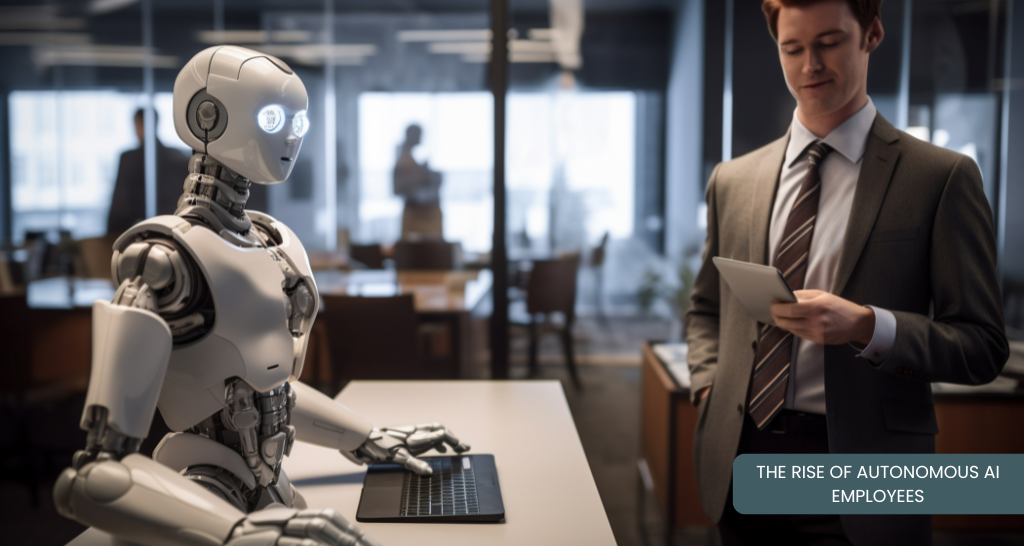
In recent years, the concept of autonomous AI employees has gained significant traction across a variety of industries. Autonomous AI employees, often referred to as intelligent agents or automated workers, are advanced systems capable of performing tasks and making decisions without human intervention. These systems are designed to interpret data, learn from processes, and adapt to new situations, which enables them to operate independently in various settings, ranging from manufacturing to customer service.
The technological advancements that have facilitated the rise of autonomous AI employees can be attributed to significant progress in machine learning, natural language processing, and robotics. Machine learning algorithms allow AI systems to analyze vast amounts of data, recognize patterns, and improve their performance over time. This capability is essential for autonomous AI employees as it empowers them to handle complex and dynamic environments efficiently.
One prominent example of autonomous AI employees is the application of robotic process automation (RPA) in business operations. RPA systems automate repetitive tasks such as data entry, payroll processing, and inventory management, allowing human workers to focus on more strategic activities. Another sector witnessing the impact of these intelligent systems is retail, where AI-driven chatbots enhance customer experience by providing instant support and personalized recommendations.
The capabilities of autonomous AI employees extend beyond task execution; they also encompass decision-making processes. For instance, AI systems can analyze market trends and consumer behavior to inform strategic business decisions, thereby enhancing overall productivity and efficiency. As companies continue to explore the potential of these technologies, it is evident that autonomous AI employees will play a pivotal role in shaping the future of work.
Historical Context: The Evolution of AI in the Workplace
The journey of artificial intelligence (AI) in the workplace can be traced back to the early forms of automation, which began in the manufacturing sector during the mid-20th century. Initially, the introduction of simple mechanization in assembly lines marked a significant shift in how tasks were performed. Machines were designed to handle repetitive tasks, enhancing efficiency and providing a foundation for future automation technologies.
As technology advanced, the late 20th century ushered in developments in machine learning. This innovation transformed how data was processed and analyzed, allowing systems to learn from patterns and improve over time. Early applications of machine learning in industries such as finance and logistics significantly reduced human error and optimized operations. The rise of computers in the workplace further supplemented this transition, as organizations began to leverage computational power for complex decision-making processes.
The 21st century witnessed a rapid evolution of AI technologies, fueled by increased computational capabilities and vast amounts of data generated by digital systems. Organizations recognized the potential of AI not only to increase productivity but also to enhance customer experiences. The introduction of AI-powered tools in areas such as customer service, human resources, and project management exemplified this trend. Companies began adopting solutions like chatbots and predictive analytics, which allowed them to operate more efficiently and make informed decisions.
Furthermore, the concept of autonomous AI employees emerged, illustrating a fundamental shift in workforce dynamics. These AI systems are designed to perform tasks with minimal human intervention, raising questions about the future role of human workers and the nature of work itself. As businesses continue to integrate AI-driven solutions, understanding this historical context becomes essential in addressing the challenges and opportunities presented by autonomous AI employees.
Current Applications of Autonomous AI in Various Industries
The integration of autonomous AI employees across various industries has rapidly evolved in recent years, significantly altering how businesses operate. In the finance sector, for instance, autonomous AI systems are being utilized for algorithmic trading, risk assessment, and fraud detection. Companies like JPMorgan Chase have implemented AI-driven tools to analyze vast datasets, enhancing decision-making processes while reducing human error.
In healthcare, autonomous AI applications have proven to be transformative. AI algorithms assist in diagnosing diseases at an early stage, analyzing medical images more efficiently than human specialists. For example, IBM’s Watson is widely recognized for its capabilities in analyzing patient data and assisting doctors in formulating treatment plans for conditions such as cancer. The predictive analytics capabilities of AI in healthcare significantly improve patient outcomes by allowing for tailored treatment strategies.
Manufacturing is another sector experiencing a surge in the use of autonomous AI. Robotics powered by AI are now commonplace on production lines, performing tasks ranging from assembly to quality inspection. Companies like Tesla have embraced autonomous AI to optimize their manufacturing processes, resulting in increased efficiency and reduced operational costs. The adaptability of AI allows for real-time adjustments to production schedules, enhancing responsiveness to market demands.
Additionally, the customer service industry is witnessing a rise in autonomous AI employees through the use of chatbots and virtual assistants. These AI systems can handle inquiries, resolve issues, and provide personalized support 24/7. Major corporations, including Amazon, have successfully implemented AI-driven customer service solutions, leading to enhanced customer satisfaction and loyalty by ensuring prompt, accurate responses to consumer inquiries.
Advancements in Technology Driving AI Autonomy
The evolution of autonomous AI employees can be significantly attributed to rapid advancements in several technological domains. Central to this transformation are AI algorithms, which serve as the backbone of machine intelligence. These algorithms have evolved from basic processing techniques to complex models capable of executing tasks previously thought to be the exclusive realm of human cognition.
One notable advancement is in machine learning, which enables algorithms to learn from and adapt to new data continuously. This capability allows autonomous AI systems to improve their accuracy and efficacy over time, responding adeptly to dynamic environments and user needs. As machine learning techniques such as deep learning have matured, they have led to unprecedented performance levels in tasks such as image recognition, speech processing, and decision-making.
Natural language processing (NLP) is another crucial technology that enhances AI’s ability to operate independently. Through NLP, AI systems can understand, interpret, and generate human language, facilitating more natural interactions with users. This understanding goes beyond mere keyword recognition, encapsulating context, sentiment, and nuances of human communication. Such capabilities have allowed autonomous AI employees to execute customer service tasks, interpret queries, and provide tailored responses.
Furthermore, advancements in robotics have complemented AI algorithms and machine learning by providing physical embodiments of autonomous systems. These robots can perform intricate tasks in industries ranging from manufacturing to healthcare, utilizing advanced sensors and control systems that allow for interactions with the physical world. By integrating AI with robotics, companies can achieve unprecedented levels of automation, leading to heightened efficiency and productivity.
Collectively, these technological advancements pave the way for a future where autonomous AI employees can operate seamlessly within various sectors, ushering in a new era of innovation and efficiency in the workplace.
Benefits of Utilizing Autonomous AI Employees
The integration of autonomous AI employees into various industries poses multiple benefits that can significantly enhance operational efficiency. One notable advantage of employing these AI systems is their ability to perform tasks with remarkable speed and accuracy. Unlike human counterparts, AI can process vast amounts of data quickly, leading to increased productivity levels. As a result, organizations can focus on strategic decision-making while AI handles routine tasks, thus streamlining workflows.
Moreover, the utilization of autonomous AI can result in substantial reductions in operational costs. By automating functions such as data entry, customer service inquiries, and analysis, businesses can minimize labor costs and decrease the likelihood of human error. Furthermore, AI systems operate around the clock without the constraints of fatigue or error-proneness, resulting in continuous output and efficiency.
In addition to boosting efficiency and lowering costs, autonomous AI employees enhance accuracy in their operations. For example, in sectors such as finance, AI can analyze trends and predict market changes far beyond the capabilities of human analysts. This precision not only improves internal processes but also increases compliance with industry standards, thereby reducing the risk of financial penalties or losses.
Furthermore, autonomous AI can contribute positively to customer experiences. With the ability to offer personalized services, AI can analyze customer preferences and behaviors, enabling businesses to tailor their offerings effectively. This customization can lead to improved customer satisfaction and loyalty, as clients receive timely and relevant interactions with the company.
Importantly, it is essential to recognize that autonomous AI is designed to support human employees rather than replace them. By handling repetitive tasks, AI allows human workers to engage in more complex and satisfying roles that require emotional intelligence, creativity, and critical thinking. This complementary relationship fosters a collaborative atmosphere, promoting teamwork between AI and human employees.
Challenges and Concerns Surrounding Autonomous AI Employees
The rise of autonomous AI employees presents a range of challenges and ethical concerns that must be addressed as these technologies become more prevalent in the workplace. One of the primary fears associated with the deployment of autonomous AI systems is job displacement. As AI becomes increasingly capable of performing tasks traditionally conducted by human workers, there is anxiety surrounding the potential for widespread unemployment. It is essential that businesses and policymakers engage in proactive discussions regarding how to retrain and support workers who may be adversely affected by this technological shift.
Another significant concern is related to data privacy. Autonomous AI employees often rely on vast amounts of data to make decisions and perform tasks. This dependence raises questions about how sensitive data is collected, managed, and protected. Organizations must ensure they develop robust data governance frameworks to mitigate risks of data breaches and misuse, which are paramount in maintaining trust with employees and clients.
The issue of accountability in decision-making is also critical in discussions about autonomous AI. When AI systems make decisions that impact human lives, it can become quite difficult to determine accountability in the event of an error or adverse outcome. Establishing clear guidelines and frameworks for accountability is necessary to navigate these complex scenarios when autonomous systems are involved.
Finally, the need for regulatory frameworks cannot be overstated. As organizations increasingly rely on autonomous AI employees, there is a growing imperative for comprehensive regulations that address ethical considerations, data privacy, job displacement, and accountability. Stakeholders must collaborate continuously to ensure that the growth of AI in the workplace occurs in a responsible, ethical manner that benefits society as a whole.
The Future of Work: Co-existing with Autonomous AI Employees
The rapid advancement of technology has ushered in a new era where autonomous AI employees are poised to become an integral part of the workforce. This evolution raises essential questions regarding the future of work and the potential for humans and AI to coexist in productive environments. As we navigate this transition, it is crucial to understand the transformations that will occur in various job sectors.
Many traditional jobs are likely to undergo significant changes, with routine and repetitive tasks being automated by AI. This shift could result in a decline in certain roles while simultaneously creating new opportunities that emphasize human skills. Positions requiring creativity, interpersonal communication, and critical thinking will remain vital as AI systems take over more operational duties. Consequently, new roles centered around AI management, data analysis, and human-AI collaboration are expected to emerge, necessitating a reevaluation of workforce training and education.
For workers to thrive alongside autonomous AI employees, a continuous commitment to skill development will be essential. Emphasizing lifelong learning will equip employees with the versatility needed to adapt to a continuously evolving work environment. Skills such as emotional intelligence, problem-solving, and advanced technological proficiency will become increasingly valuable. Moreover, as the lines between human and AI contributions become blurred, the ability to work collaboratively with AI systems will be paramount.
The future of work is likely to be characterized by a synergistic relationship between humans and autonomous AI employees, where each complements the strengths of the other. This partnership has the potential to enhance productivity, drive innovation, and ultimately reshape our understanding of work itself. In fostering this coexistence, society must prioritize ethical considerations and workforce preparedness to ensure that the integration of AI brings about equitable and sustainable outcomes.
Case Studies: Successful Integration of Autonomous AI in Businesses
The integration of autonomous artificial intelligence (AI) into business operations has been transformative for several organizations across various sectors. This section delves into practical case studies illustrating how businesses have successfully leveraged autonomous AI employees to enhance productivity and improve overall efficiency.
One notable example is Siemens, a global leader in manufacturing and technology. Siemens implemented AI-driven robots to assist in their production lines. This initiative aimed to optimize the assembly processes by reducing the time taken to complete tasks and minimizing human error. The outcome was remarkable, with productivity increasing by 15% in several facilities. Siemens’ strategic integration included extensive training of their existing workforce to work alongside these autonomous AI machines, ensuring that the transition was seamless and collaborative.
Another compelling case is found in the retail sector, specifically with Walmart. The company introduced autonomous AI systems for inventory management in its warehouses. Utilizing machine learning algorithms, these AI systems are capable of scanning shelves and tracking stock levels in real-time, enabling a more efficient supply chain process. The results were impressive; Walmart saw a 10% decrease in inventory carrying costs and an enhancement in stock availability. This successful integration was grounded in detailed phase-wise implementation, which included pilot testing before a full-scale rollout.
Furthermore, in the financial sector, JPMorgan Chase adopted autonomous AI for document analysis and fraud detection. The firm’s AI systems can analyze vast amounts of data quickly and with a high degree of accuracy, which has reduced the time spent on compliance tasks by up to 70%. The bank’s strategy involved collaborating with tech firms to develop customized solutions that address specific operational challenges, creating a tailored approach to AI integration.
These case studies exemplify how autonomous AI employees can be effectively integrated into business operations, leading to enhanced efficiency and innovation. By adopting well-thought-out strategies, companies are reinventing their workflows and achieving significant competitive advantages in their respective markets.
Conclusion: Embracing the Autonomous AI Revolution
The emergence of autonomous AI employees represents a significant milestone in the evolution of the workplace. As organizations increasingly integrate these advanced systems, they unlock numerous benefits, including enhanced productivity, cost efficiency, and the ability to analyze vast datasets for better decision-making. This transformation arises from a confluence of advancements in artificial intelligence, machine learning, and automation technologies that empower businesses to operate more efficiently.
However, the rise of autonomous AI necessitates a thoughtful examination of the implications surrounding workforce dynamics and ethical considerations. While these AI systems can significantly augment human capabilities, they may also lead to fears of job displacement for many individuals. It is crucial for companies to navigate this landscape by implementing strategies that focus on upskilling their workforce, ensuring that employees are prepared to work alongside AI systems rather than being replaced by them.
Moreover, organizations must also address the challenges of maintaining accountability and transparency in AI operations. Stakeholders—ranging from employees to consumers—are increasingly concerned about the ethical ramifications of deploying autonomous AI solutions. Companies must prioritize the establishment of guidelines that foster responsible AI use, which ensures that these technologies serve to enhance, rather than diminish, the human experience in the workplace.
In conclusion, embracing the rise of autonomous AI employees offers both promising opportunities and formidable challenges. As businesses embark on this technological journey, it is essential to find a balanced approach that harnesses the potential of AI while addressing the concerns it raises. Through a collective commitment to ethical practices and workforce adaptability, organizations can ensure a future where both AI and humans collaborate effectively for mutual success.