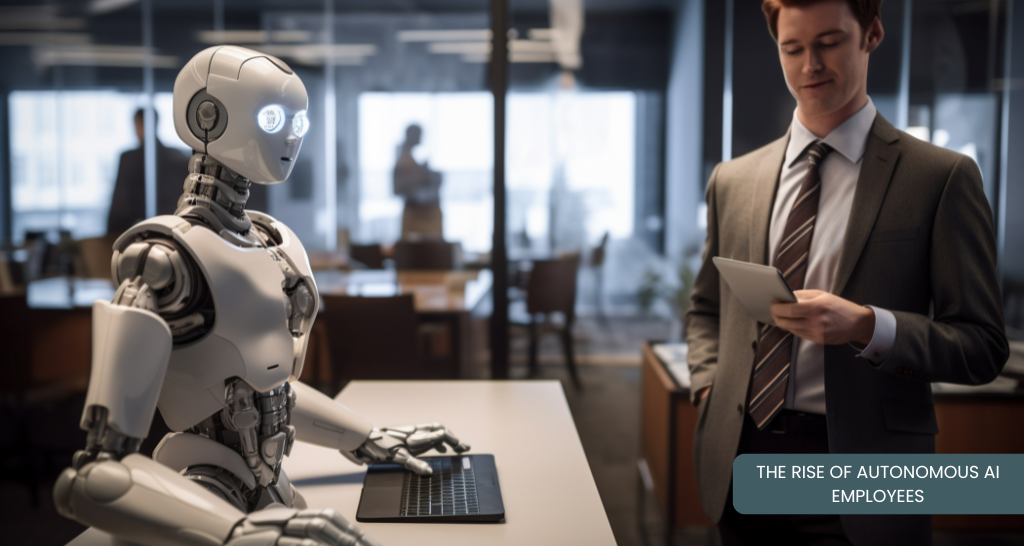

Introduction to AI Agents in Business
As we advance into the year 2026, the utilization of artificial intelligence (AI) agents has become a pivotal element in redefining business operations across various industries. AI agents, which are sophisticated software applications designed to perform specific tasks that typically require human intelligence, have evolved significantly from their inception. Initially, these agents were limited in scope and capability, primarily focusing on simple automation processes. However, recent advancements in machine learning, natural language processing, and data analysis have propelled AI agents into critical roles that enhance productivity and decision-making capabilities.
The significance of AI agents in today’s business landscape cannot be overstated. By leveraging vast amounts of data, they can provide insights and recommendations that help organizations streamline operations and improve customer experiences. For instance, AI agents can analyze customer interactions in real-time, enabling businesses to tailor services more effectively. Furthermore, they allow for the automation of routine tasks, freeing up human resources for more strategic initiatives.
Moreover, the integration of AI agents into business practices has facilitated a shift towards personalized customer engagement. This evolution is critical in an era where consumer preferences are rapidly changing. Companies are now employing AI agents to predict market trends, optimize supply chain management, and enhance operational efficiency. As a result, businesses that adopt AI agents are likely to gain a competitive advantage by being more agile and responsive to market demands.
In 2026, AI agents are no longer just supporting tools but are actively shaping the strategic direction of organizations. Their ability to learn and adapt has revolutionized traditional business models, making them essential for success in a digital economy. Understanding the transformative potential of AI agents is imperative for businesses seeking to thrive in this dynamic landscape.
Key Advancements in AI Technology
Since 2021, significant advancements in artificial intelligence (AI) technology have shaped the landscape of business operations. One such advancement is in the realm of machine learning, where algorithms have evolved to become more sophisticated and capable of processing vast datasets with greater accuracy. This leap in machine learning has empowered AI agents to deliver insights that drive informed decision-making, allowing organizations to optimize their processes and improve efficiency.
Natural language processing (NLP) has also seen remarkable enhancements. NLP technologies have reached a level of comprehension that allows AI agents to understand and generate human-like responses more effectively. This improvement facilitates better customer service experiences, as AI agents can handle complex queries and deliver contextually appropriate responses. By bridging the gap between human language and machine understanding, NLP advancements are transforming how businesses communicate with clients and stakeholders.
Robotics has similarly progressed, leading to the development of AI agents that can perform a wider variety of tasks in both physical and digital environments. These robots are increasingly capable of autonomously executing processes in manufacturing, healthcare, and retail. With advancements in computer vision and sensory technology, AI-driven robots are now equipped to adapt to dynamic environments, ensuring they can operate effectively alongside human employees.
Moreover, the integration of AI with emerging technologies such as Internet of Things (IoT) has created more cohesive systems that can monitor and analyze data in real-time. This synergy allows AI agents to respond swiftly to changes in operational conditions, enhancing adaptability. Collectively, these advancements signify a new era for AI technology, leading to more effective and efficient AI agents capable of revolutionizing business operations.
Real-World Applications of AI Agents
In recent years, AI agents have increasingly become integral to various industries, fundamentally transforming business operations. One prominent sector utilizing AI agents is healthcare. AI-driven virtual assistants and chatbots enhance patient engagement and streamline administrative tasks, such as scheduling appointments and managing medical records. For instance, AI agents can analyze patient data and provide recommendations, enabling healthcare providers to deliver personalized treatment plans more efficiently.
In the finance industry, AI agents are being deployed for risk management, fraud detection, and customer service enhancements. Financial institutions utilize machine learning algorithms to assess creditworthiness and analyze market trends, allowing for more informed decision-making. By automating routine customer service inquiries, AI agents contribute to improved response times and enhanced customer satisfaction, leading to stronger client relationships.
The retail sector also benefits from the application of AI agents. E-commerce platforms leverage AI technologies to personalize shopping experiences, employing recommendation systems tailored to individual consumer preferences. Additionally, AI agents assist with inventory management by predicting demand, ensuring optimal stock levels and reducing waste. These capabilities allow retailers to respond swiftly to market changes, improving their competitive edge.
Manufacturing has witnessed a notable transformation through the integration of AI agents in production processes. Smart robots powered by AI collaborate with human workers to enhance efficiency, improve product quality, and decrease operational costs. Predictive maintenance enabled by AI agents helps identify potential equipment failures before they occur, minimizing downtime and optimizing resource management.
Overall, the diverse applications of AI agents across various industries illustrate their crucial role in enhancing operational efficiency, improving decision-making, and fostering innovation. As businesses continue to embrace AI technologies, the potential for ongoing transformation remains vast, paving the path for a more interconnected and intelligent operational landscape.
Enhancing Efficiency and Productivity
In recent years, artificial intelligence (AI) agents have emerged as pivotal tools for organizations aiming to enhance efficiency and productivity across various operational dimensions. By automating routine tasks, AI agents streamline procedures that were traditionally time-consuming and often prone to human error. This level of automation allows employees to devote their time to more strategic initiatives, thereby fostering not only increased productivity but also workplace satisfaction.
Moreover, AI agents excel at optimizing resource allocation, ensuring that businesses can allocate their physical, financial, and human resources more intelligently. Through advanced data analytics and machine learning algorithms, AI systems can analyze vast amounts of data to identify patterns and forecast future needs. This predictive capability empowers organizations to make informed decisions regarding inventory management, workforce requirements, and budget allocation, significantly reducing waste and enhancing overall operational effectiveness.
Another critical area where AI agents foster efficiency is through improved decision-making processes. By providing real-time insights and analysis, these systems allow leaders to assess different scenarios promptly and choose the most appropriate course of action. In industries ranging from finance to healthcare, AI-driven insights help minimize risks and capitalize on new opportunities swiftly, thereby maintaining a competitive edge in an ever-evolving market landscape.
In conclusion, the integration of AI agents into business operations marks a significant leap towards achieving higher efficiency and productivity. Through automation of mundane tasks, optimized resource utilization, and enhanced decision-making capabilities, organizations can harness the full potential of AI technology, leading to improved performance and sustainable growth in 2026 and beyond.
AI Agents and Customer Experience
In the rapidly evolving landscape of business operations, AI agents have emerged as pivotal tools in transforming customer experience. They serve various functions in sectors such as customer service, sales, and personalized marketing, significantly enhancing the interaction between businesses and their clientele.
AI agents are increasingly integrated into customer service platforms, providing prompt assistance around the clock. This 24/7 availability not only improves response times but also ensures that customer inquiries are addressed efficiently. By employing natural language processing algorithms, AI agents can understand and respond to customer queries in real-time, often resolving issues without human intervention. This not only boosts customer satisfaction but also allows human agents to focus on more complex tasks, leading to better resource allocation within the organization.
In the realm of sales, AI agents are being utilized to analyze customer behavior and preferences. Through advanced data analytics, these agents can provide tailored product recommendations to customers, enhancing the shopping experience and directly contributing to sales growth. This personalized marketing approach creates a more engaging interaction for the consumer, as AI agents can suggest products based on previous purchases or browsing history, thereby fostering customer loyalty.
Moreover, AI agents contribute to a more cohesive customer journey by tracking and analyzing data across various touchpoints. This holistic view enables businesses to identify areas for improvement and refine their strategies accordingly. As companies continue to embrace AI technology, it becomes evident that the role of AI agents in shaping customer experience is vital, paving the way for more responsive, personalized, and efficient service.
The Role of AI Agents in Data Analysis
In the fast-evolving business landscape of 2026, AI agents are playing a pivotal role in revolutionizing data analysis. These intelligent systems leverage advanced algorithms and machine learning capabilities to sift through vast amounts of data, identifying trends and patterns that may elude human analysts. As organizations strive for data-driven decision-making, the implementation of AI agents has become essential.
AI agents facilitate enhanced data analysis by automating processes that traditionally required significant human resources. They can analyze real-time data streams, integrating information from various sources and transforming it into actionable insights. This capability allows businesses to respond to market changes promptly, ensuring they remain competitive in an increasingly data-centric environment.
Moreover, the accuracy of AI agents surpasses that of their human counterparts in many cases. By minimizing the potential for human error, these agents improve data reliability, which is crucial for strategic decision-making. Additionally, AI agents can continuously learn from the datasets they process, refining their analytical capabilities and adapting to new patterns over time. This adaptive learning ensures that the insights businesses derive remain relevant and timely.
Through the use of natural language processing, AI agents have made it easier for stakeholders to interact with data. They can generate reports and present findings in a user-friendly format, making data analysis accessible even to those without a technical background. This democratization of data enables broader participation in strategic discussions, fostering a culture of innovation and collaboration within organizations.
In summary, the role of AI agents in data analysis is transformative, making it possible for businesses to harness the full potential of their data resources. The insights derived not only drive strategic decisions but also enhance competitive advantages, positioning organizations favorably in the marketplace.
Challenges and Ethical Considerations
The proliferation of AI agents in business operations, while heralded for their efficiency and innovation, also brings forth several challenges and ethical concerns that require careful examination. One prevalent issue is the presence of biases in AI algorithms. These biases can stem from the training data used to develop the algorithms or from the inherent prejudices of the developers themselves. Consequently, biased AI systems may generate skewed outcomes that negatively impact decision-making processes, hiring practices, and customer relations.
Furthermore, the increasing reliance on AI agents raises alarm regarding potential job displacement. Automation has historically transformed the workforce by rendering certain roles obsolete. As AI agents become more capable, particularly in tasks traditionally performed by humans, there is a growing concern that entire sectors may face significant contraction. Industries such as manufacturing, customer service, and even professional services could experience substantial shifts, leading to unemployment and requiring workforce retraining and upskilling initiatives.
Another critical aspect to consider is data privacy. As AI agents process vast amounts of data to enhance business operations, ensuring the privacy and security of that data becomes paramount. Organizations must navigate the complexities of data ownership, regulatory compliance, and customers’ expectations. Establishing robust data governance frameworks and transparent practices is essential to mitigate risks while fostering trust between businesses and their clients.
Addressing these challenges and ethical considerations is pivotal for businesses that seek not only to leverage AI agents effectively but also to uphold integrity and social responsibility in their operations. By acknowledging and tackling these issues, organizations can implement AI strategies that are not only efficient but also equitable and respectful of individual rights.
Future Trends in AI and Business Operations
The landscape of business operations is on the brink of a major transformation due to the advancements in artificial intelligence (AI). As we look beyond 2026, several trends are emerging that indicate how AI technology will continue to shape the future of organizations globally. One of the most significant developments is the integration of AI with the Internet of Things (IoT). This convergence enables seamless communication between devices, allowing businesses to gather and analyze vast amounts of data in real-time. Such integration enhances operational efficiency, reduces costs, and enables predictive maintenance, ultimately leading to a more agile business environment.
Additionally, advancements in cognitive computing are set to elevate the role of AI in business operations. Cognitive computing refers to systems that simulate human thought processes, allowing AI agents to understand, learn, and respond to complex queries. This capability will enable organizations to leverage AI in more intricate decision-making processes, providing insights that were previously unattainable. The ability to process unstructured data, such as social media interactions or customer feedback, will empower businesses to tailor their products and services to meet evolving consumer needs.
Furthermore, the rise of autonomous AI agents is expected to significantly influence business operations. As these intelligent systems become more capable, they will take on tasks traditionally performed by humans, from customer service to supply chain management. This shift will not only streamline processes but also free up human employees to focus on more strategic and creative tasks, fostering innovation within organizations.
In summary, the future of AI in business operations appears promising, with trends such as IoT integration, advancements in cognitive computing, and the rise of autonomous agents set to revolutionize how companies operate. As these technologies evolve, organizations must adapt to harness their full potential and sustain competitive advantages in an increasingly complex marketplace.
Conclusion: The New Business Landscape with AI Agents
As we navigate through the developments of 2026, it is evident that AI agents have fundamentally reshaped the business landscape. Organizations that have embraced the integration of AI into their operations have experienced significant efficiencies and enhanced decision-making capabilities. From streamlining workflows to providing real-time data analytics, AI agents are becoming indispensable tools for businesses seeking to maintain a competitive edge.
The adoption of AI technologies has allowed companies to automate routine tasks, thereby freeing up human resources to focus on more strategic initiatives. This shift not only increases productivity but also fosters innovation within teams. Businesses that adapt to these changes will find themselves better positioned to respond to market demands and consumer preferences, ultimately leading to greater customer satisfaction.
Furthermore, the ability of AI agents to analyze vast amounts of data ensures that organizations can make informed decisions swiftly, a critical factor in today’s fast-paced marketplace. However, successful implementation requires a mindset shift where businesses must prioritize ongoing training and development of their workforce to work alongside these technologies effectively.
In conclusion, as AI agents continue to evolve, their role in business operations will only expand. Companies must recognize the importance of not just adopting AI tools but also cultivating a culture that embraces change. The organizations that thrive in this new environment will be those willing to invest in technology while also supporting their employees through this transformation. The journey to integrating AI agents into business operations is not merely a trend but rather a pivotal shift that will define the future of business strategy and execution.