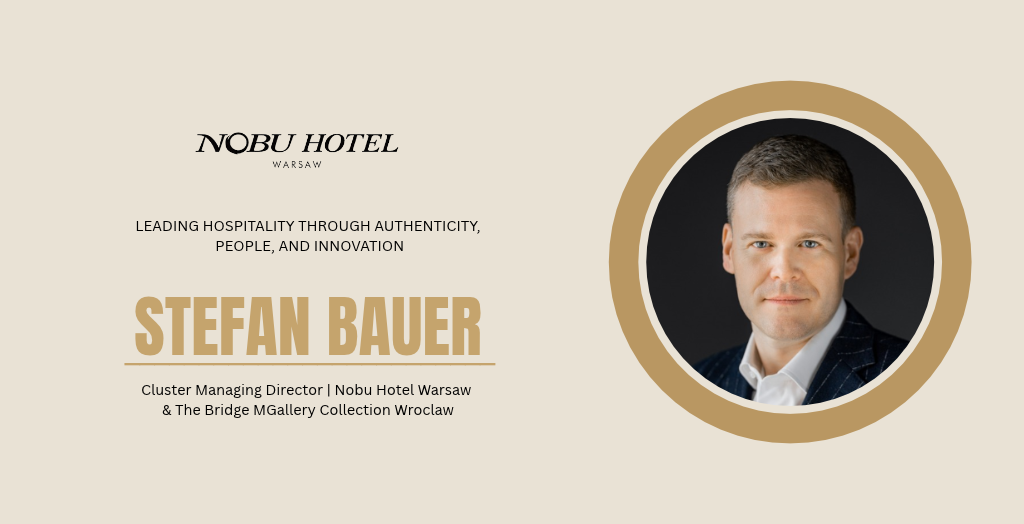
I believe hospitality is more than providing a place to stay. It is about understanding people, creating meaningful experiences, and building connections that encourage guests to return. As Cluster Managing Director of Nobu Hotel Warsaw and The Bridge MGallery Collection Wroclaw in Poland, my international career across diverse cultures and destinations has shaped my approach to leadership, guest experience, and operational excellence. Today, I combine commercial awareness, people-focused leadership, and a commitment to innovation to strengthen both properties while preserving the authentic human connections that lie at the heart of hospitality.
An International Journey Shaped by Curiosity
My passion for travel, people, and places began early in Austria. Working abroad introduced me to different cultures, languages, and perspectives, strengthening my interest in an industry that brings people together. After graduating from hotel school in Klessheim, Salzburg, I began a professional journey that took me across several international destinations.
My first experience in London involved working night shifts as a dishwasher. From there, I progressed through opportunities in Toronto, Beijing, Vienna, Prague, Rome, and Kitzbühel before continuing my career in Wroclaw and Warsaw. Each destination offered new lessons about hospitality, guest expectations, and the importance of adapting to different working environments.
My career progression has been equally varied. Having worked as a dishwasher, in-room dining order taker and server, meetings coordinator, Food and Beverage Manager, Regional Director, and General Manager, I have experienced hospitality from multiple perspectives. These roles helped me understand the interconnected responsibilities that keep a hotel operating successfully.
This experience continues to influence my leadership philosophy. I believe every position contributes to the overall guest experience and deserves respect. My journey has taught me that professional growth requires patience, curiosity, openness to different cultures, and a willingness to learn at every stage. That is also the reason why I signed up for my EMBA studies at Les Roches, which I completed in 2025.
Creating Synergy Across Two Distinct Properties
Leading Nobu Hotel Warsaw and The Bridge MGallery Collection Wroclaw requires an understanding of two properties with their own identities, teams, and market opportunities. My experience working across both hotels has reinforced my belief that a cluster structure can create significant commercial and operational benefits.
By bringing teams together and comparing performance data, we can improve reporting, identify opportunities, and respond more quickly to changing business conditions. Shared procurement opportunities and a common environment for exchanging ideas also allow colleagues to learn from one another while developing solutions that benefit both operations.
However, collaboration does not mean removing the individuality of each hotel. I recognise that different brands must retain their own identities and service principles. Attracting people who understand these values, encouraging their ideas, and helping them connect personally with guests and colleagues are essential to delivering a consistent brand experience.
The cluster strategy also supports professional development by creating opportunities for employees to gain exposure to different working environments. For me, this combination of commercial efficiency, shared learning, and brand individuality has demonstrated the value of the approach during 2026.
A Leadership Philosophy Built on Respect
My leadership style reflects my experience of progressing through different levels of hotel operations. Having worked in frontline and management positions, I understand that a hotel functions like clockwork, with every component contributing to the whole. Yet, unlike a machine, its most important components are people.
I believe effective leadership requires patience, listening, and leading by example. Rather than assuming there is one solution for every challenge, I consider each situation individually, drawing on experience while remaining willing to learn and improve.
Respect is central to this approach. Understanding the responsibilities and pressures associated with different roles enables me to appreciate the contributions of my teams. I also see knowledge-sharing as an important responsibility, particularly when helping colleagues develop their confidence and capabilities.
I encourage teams to establish clear goals and key performance indicators at the beginning of the year, ensuring that employees understand the objectives and feel involved in achieving them. When circumstances change, leaders must listen, reflect, and adjust the course where necessary. Ultimately, the leader must make the final decision and accept responsibility for the outcome.
Making Guest Experiences Personal
In a competitive hospitality market, I believe authenticity is one of the most valuable ways to create memorable experiences. Today’s travellers are often well informed and experienced, making genuine human interaction increasingly important.
While facilities and service standards remain essential, the emotional connection created through thoughtful gestures and carefully curated experiences can distinguish a stay from an ordinary visit. I encourage teams to connect with guests as individuals, understanding their expectations and responding in ways that feel personal rather than routine.
These interactions can influence whether guests return and recommend a property to others. By combining brand standards with authentic engagement, we can create experiences that reflect the character of each property while making visitors feel valued.
I also recognise that teamwork becomes particularly important during difficult periods. Colleagues may need to support one another beyond their usual responsibilities, approaching challenges with the understanding that hospitality is ultimately a people business.
Balancing Commercial Performance and Quality
Commercial success is essential to sustainable hotel operations, but I believe it must be balanced with investment in quality and consistency. Decisions should consider financial returns without losing sight of the standards that shape the guest experience.
The ability to respond quickly to changes in demand and market conditions is another important factor. I emphasise preparation, flexibility, and the value of having alternative plans in place. When circumstances change unexpectedly, teams that have considered different scenarios are better positioned to respond effectively.
My approach combines clear performance objectives with practical decision-making. By monitoring results, sharing information across the cluster, and remaining attentive to market developments, we can identify opportunities while managing risks.
Developing People for Long-Term Success
I see employee development as an ongoing process rather than a one-time activity. Transparent performance reviews take place twice a year, giving employees opportunities to discuss their progress, identify areas for improvement, and consider future career goals.
Cross-exposure between departments and properties, internal and external training, and opportunities for internal promotion help team members broaden their experience. These practices also support retention by demonstrating that professional growth is a meaningful part of the organisation.
For me, strong teams emerge when people understand expectations, receive constructive guidance, and have opportunities to contribute. Leaders must remain approachable and willing to listen while maintaining accountability for decisions and results.
Technology, Sustainability, and Responsible Operations
Technology is changing how guests interact with hotels. Digital tools allow travellers to manage more aspects of their journeys independently, while super intelligence is expected to influence an increasing number of customer touchpoints. I believe these developments can improve response times and operational efficiency, allowing employees to devote more attention to meaningful human interactions.
The challenge is to adopt new solutions at an appropriate pace while preserving the personal service that defines hospitality. At our properties, initiatives such as the Duve solution at The Bridge and a new Nobu app reflect efforts to improve the guest journey. I view technology as a tool that should support teams and enhance service rather than replace genuine human engagement.
Responsible operations are equally important. Our hotels operate with LEED and Green Key certifications and incorporate energy-conscious features such as light sensors and smart air-conditioning and ventilation systems. Additional practices include soap recycling and waste separation.
Beyond environmental measures, our properties participate in corporate social responsibility initiatives supporting a home for single mothers, a children’s cancer foundation, animal shelters, and neighbourhood projects for people in need. These efforts reflect a broader understanding of hospitality’s responsibility to the communities in which we operate.
Looking Ahead in Poland’s Hospitality Market
I see Poland as an emerging hospitality market with positive growth potential. At the same time, geopolitical unrest, hybrid-war risks, and economic instability create uncertainties that businesses must monitor carefully.
My response is to remain informed, adjust strategies when necessary, and avoid panic during periods of disruption. Preparation and a clear crisis plan help organisations navigate unexpected developments while continuing to focus on long-term objectives.
Looking ahead, I want Nobu Hotel Warsaw and The Bridge MGallery Collection Wroclaw to become preferred places to stay for people travelling to Poland. Strengthening visibility, maintaining quality, and delivering consistent experiences will be central to building trust and encouraging positive word of mouth.
My view of leadership continues to evolve as well. I believe leaders must remain flexible and open to new approaches, questioning established patterns when circumstances demand change while preserving the principles that matter most.
My advice to aspiring hospitality professionals is straightforward: remain patient and curious, explore the world, and keep an open mind toward different cultures and perspectives. Every role matters, and every experience can provide a valuable lesson. Above all, success in hospitality depends on genuinely enjoying working with people.
For me, the future of hospitality lies in combining thoughtful innovation with authentic service, commercial discipline with people development, and operational excellence with a lasting respect for the individuals who make every guest experience possible.