Introduction to Digital Marketing Evolution
Digital marketing has emerged as an indispensable component of modern business strategy, revolutionizing how brands connect with consumers. Over the past two decades, there has been a significant shift from traditional marketing methods, such as print advertising and direct mail, to innovative digital platforms that offer unparalleled reach and engagement. This evolution reflects changing consumer behaviors influenced by rapid technological advancements, making it essential for businesses to adapt their marketing strategies accordingly.
As the internet became accessible to a wider audience, companies began to explore digital channels, leading to a fundamental transformation in how marketing is conducted. The introduction of social media platforms brought forth new ways for brands to interact with customers, enabling direct communication and personalized experiences. Moreover, search engine optimization (SEO) practices and targeted advertising have allowed marketers to understand and meet consumer needs with greater precision.
Today, digital marketing encompasses various tactics, including content marketing, email campaigns, and social media engagement, forming a complex network that prioritizes consumer-centric approaches. This shift has not only enhanced brand visibility but also empowered consumers, who now have greater control over their purchasing decisions. The reliance on data and analytics in digital marketing has further revolutionized strategies, allowing marketers to measure the effectiveness of their efforts and pivot accordingly.
In light of these developments, the landscape of digital marketing is expected to evolve even further by 2026. Emerging technologies such as artificial intelligence and machine learning will likely play a pivotal role in shaping marketing strategies. As consumers increasingly seek personalized experiences, businesses will need to leverage technological advancements to better understand consumer behavior and preferences. The evolution of digital marketing continues to set the stage for a thrilling journey ahead, highlighting the importance of innovation and adaptability in the digital realm.
Emerging Technologies Shaping Digital Marketing
The landscape of digital marketing is constantly evolving, and as we move through 2026, several emerging technologies are redefining the strategies employed by businesses. Key among these technologies are artificial intelligence (AI), machine learning, augmented reality (AR), and virtual reality (VR). Their integration into digital marketing is enhancing customer engagement and personalizing user experiences at an unprecedented rate.
Artificial intelligence has become a cornerstone in the realm of digital marketing. By leveraging AI algorithms, companies can analyze vast amounts of data to glean insights about consumer behavior, preferences, and trends. This capability allows for more targeted marketing campaigns, ensuring that promotions and advertisements are tailored to the needs of individual consumers. Machine learning, a subset of AI, further refines these efforts. It enables marketers to optimize strategies in real-time based on ongoing feedback and data analysis, ultimately leading to more efficient resource allocation and better ROI.
On the more visual front, augmented reality (AR) and virtual reality (VR) are gaining traction as powerful tools for customer engagement. AR applications allow consumers to interact with products virtually, trying them out in their own spaces before making a purchase. This capability not only enhances the shopping experience but also significantly lowers the return rates. Meanwhile, VR can create immersive experiences that engage consumers on a deeper emotional level, making storytelling more impactful. Brands are increasingly utilizing these technologies to create memorable experiences that resonate with their target audiences.
As digital marketing continues to evolve, the adoption of these emerging technologies will likely lead to more innovative and personalized strategies. The potential to engage customers through tailored experiences signifies a shift in how brands interact with consumers, ushering in a new era of marketing in the digital domain.
The Role of Data Analytics in Digital Marketing
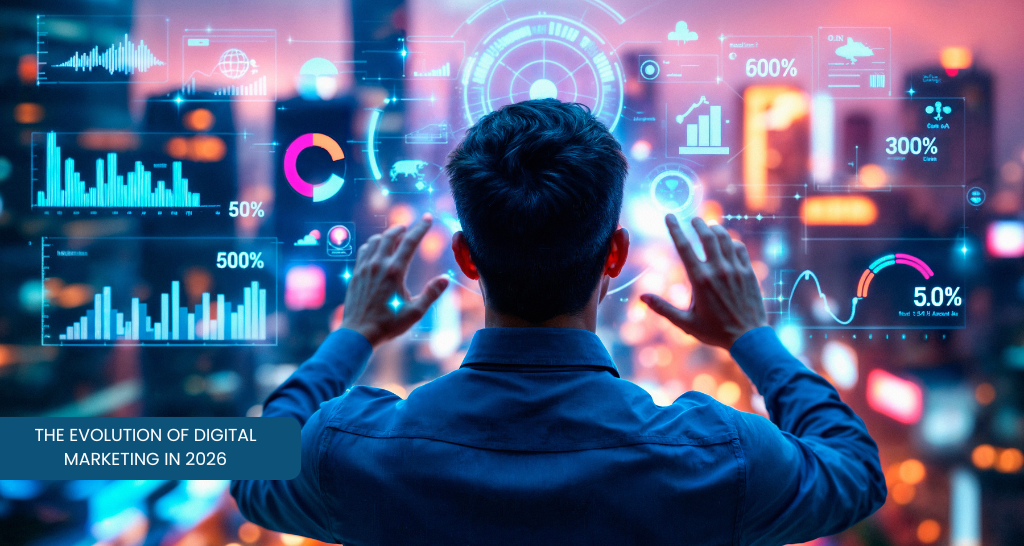
As we advance into 2026, data analytics is becoming ever more central to the effectiveness of digital marketing strategies. In an era characterized by rapid technological development and an abundance of information, marketers are increasingly relying on big data to gain insights into consumer behavior. By analyzing vast datasets, businesses can identify trends, preferences, and patterns that inform campaign strategies, ultimately enhancing customer engagement and satisfaction.
The importance of data-driven decision-making cannot be overstated. Marketers are employing sophisticated analytical tools that leverage algorithms and machine learning to dissect consumer interactions across multiple channels. Through these insights, campaigns can be fine-tuned in real-time, ensuring that the messaging resonates with target audiences. For instance, predictive analytics enables companies to forecast future behaviors based on historical data, allowing for proactive rather than reactive marketing strategies.
Moreover, measuring the success of marketing campaigns is intrinsically tied to the utilization of data analytics. Key performance indicators (KPIs) are formulated through analytical insights, and marketers can employ A/B testing to assess the impact of various campaign elements. By tapping into these advanced analytics, companies can better understand which tactics yield favorable outcomes and adjust accordingly. Thus, the loop of continuous improvement can be established, positioning businesses to adapt swiftly to evolving market conditions.
In 2026, the role of data analytics will not only focus on optimization but also ensure personalization at scale. Utilizing consumer data ethically will foster stronger relationships, as customers begin to expect tailored experiences. Thus, integrating data analytics into digital marketing strategies is not merely an enhancement; it is a necessity for thriving in a competitive landscape.
Personalization and Customer Experience
As the landscape of digital marketing continues to evolve, the emphasis on personalization and enhancing customer experience has become paramount. In 2026, brands will increasingly recognize the need to tailor marketing efforts to meet the unique preferences and behaviors of individual customers. This shift towards personalization is not merely a trend but a strategic necessity driven by heightened competition and evolving consumer expectations.
One of the primary strategies that companies will adopt involves leveraging data analytics to gain deeper insights into customer behaviors and preferences. By analyzing consumer interactions across various platforms, brands can identify specific patterns that inform personalized marketing campaigns. These insights allow businesses to create individualized content that resonates with customers on a more personal level, improving engagement and fostering loyalty.
Moreover, advancements in artificial intelligence (AI) and automation are playing a critical role in enhancing personalization efforts. AI-driven tools facilitate the segmentation of audiences with unprecedented accuracy, enabling marketers to deliver tailored messages at the right time and through the right channels. Automation assists in streamlining the delivery of personalized content, ensuring that potential customers receive relevant information without overwhelming them with generic advertisements.
Additionally, businesses will explore interactive and immersive experiences that further enrich customer interactions. For instance, virtual reality (VR) and augmented reality (AR) technologies allow brands to offer personalized shopping experiences that cater to individual tastes and preferences. These technologies not only create memorable experiences but also drive higher conversion rates as customers feel more connected with the brand.
In this era, fostering customer satisfaction through personalized marketing strategies is essential for brand loyalty. As consumers continue to demand greater transparency and relevance from the brands they engage with, those that effectively address these expectations are likely to thrive in the competitive digital marketing arena.
Social Media Marketing Trends
As we move deeper into 2026, social media marketing continues to undergo rapid transformations, driven by changes in user behavior, technological advancements, and shifting platform algorithms. Marketers must stay attuned to these developments to effectively engage with their target audiences and enhance their digital marketing strategies. One pivotal trend is the rise of artificial intelligence (AI) and machine learning, which are increasingly integrated into social media platforms. These technologies are refining algorithms, thus influencing how content is prioritized and displayed to users. Consequently, marketers will need to adopt more data-driven approaches, using insights derived from AI to tailor content that resonates with specific segments of their audience.
Another significant trend is the ongoing growth of ephemeral content, characterized by posts that disappear after a short period. Platforms such as Instagram and Snapchat have popularized this format, prompting brands to create more authentic and engaging content that encourages immediate interaction. By leveraging ephemeral content, marketers can foster a sense of urgency and exclusivity, enhancing audience engagement. Moreover, the expansion of video content continues to dominate social media landscapes, with short-form videos capturing users’ attention more effectively than traditional static media. Brands that adapt their marketing strategies to prioritize video content will likely see improved reach and engagement rates.
In addition to these trends, brands must also be cognizant of the increasing importance of authenticity and social responsibility within their social media messaging. Consumers are becoming increasingly discerning, expecting brands to communicate transparently and align with their values. Savvy marketers will need to craft messages and campaigns that not only highlight their products but also demonstrate a commitment to social causes, fostering a deeper connection with consumers.
Sustainability in Digital Marketing
The relevance of sustainability in digital marketing has surged dramatically in recent years, particularly as consumers are increasingly prioritizing environmentally conscious brands. In 2026, this trend has evolved, leading companies to integrate sustainable practices not only in their products but also in their marketing strategies. The modern digital marketer must understand how sustainability impacts consumer behavior and decision-making processes. As a result, brands that align their messaging with eco-friendly values stand to gain a competitive edge in a crowded marketplace.
Creating awareness regarding sustainable practices involves a strategic approach to content marketing. Brands can communicate their commitment to sustainability through storytelling that highlights their environmentally friendly initiatives. Utilizing digital channels, marketers can share information about their supply chain practices, resource sourcing, and waste reduction efforts. This transparency does not only resonate with eco-conscious consumers; it fosters trust and builds long-lasting relationships.
Moreover, leveraging social media platforms offers marketers an opportunity to engage with their audience on sustainability issues. Campaigns that encourage user-generated content around sustainable practices can create a community focused on eco-friendly living. Brands may implement challenges or initiatives that promote sustainable behaviors and reward participants, thereby embedding these values into the customer experience.
Furthermore, partnerships with environmental organizations can enhance credibility and effectiveness. Collaborating on a campaign that reflects shared values can amplify a brand’s commitment and provide consumers with concrete ways to support sustainability efforts. Ultimately, as digital marketing continues to evolve, a focus on sustainable practices will be vital not only for meeting consumer expectations but also for contributing positively to the broader environmental landscape.
Influencer Marketing Evolution
The landscape of influencer marketing has undergone profound changes over the past decade, evolving to meet the demands of a digital-savvy audience. In recent years, there has been a notable shift towards micro and nano influencers, who are often perceived as more authentic and relatable than their larger counterparts. These influencers typically boast smaller followings, yet they demonstrate higher engagement rates and foster stronger connections with their audience. As a result, brands are increasingly recognizing the benefits of collaborating with these individuals, as their niche appeal can lead to more effective marketing outcomes.
Moreover, as consumers become more discerning about online content, brands are faced with the critical need to consider ethical implications within their influencer marketing strategies. Transparency has emerged as a priority, with customers expecting clear disclosures regarding sponsored posts. This focus on authenticity not only enhances trust but also aligns marketing initiatives with consumer values, encouraging brands to engage with influencers who genuinely represent their beliefs and ethos.
Additionally, the integration of influencer collaborations into broader marketing strategies is becoming commonplace. Brands are no longer viewing influencer partnerships as isolated efforts but rather as a crucial component of a cohesive marketing approach. This evolution underscores the importance of aligning influencer content with overall brand messaging, utilizing metrics and analytics to track performance across various channels. Furthermore, the potential for creating interactive and immersive experiences through influencer marketing is rapidly expanding, driven by advancements in technology such as augmented reality and live streaming.
As we look ahead to 2026, it is clear that influencer marketing will continue to adapt, reflecting the changing preferences of consumers and the evolving digital landscape. Brands that understand and apply these trends effectively will be well positioned to leverage influencer marketing as a powerful tool for reaching and engaging their target audiences.
The Importance of Multi-Channel Strategies
In 2026, the landscape of digital marketing has dramatically evolved, making the implementation of multi-channel strategies not just advantageous but essential. As consumer behavior continues to shift towards a preference for personalized and seamless experiences, brands are recognizing the need to integrate various digital channels. Multi-channel marketing refers to the practice of utilizing multiple platforms—such as social media, email, websites, and mobile applications—to create cohesive and consistent customer journeys.
The primary benefit of adopting a multi-channel approach lies in the enhancement of reach and engagement. With audiences increasingly fragmented across various channels, a single-channel strategy may limit a brand’s ability to connect with potential customers. By diversifying their marketing efforts, brands can tap into different demographics and preferences, thereby broadening their market presence. Furthermore, a multi-channel strategy maximizes the opportunities for customer interaction, allowing brands to engage customers wherever they are most active.
Additionally, integrating various channels helps in creating a unified message that resonates with users across platforms. This consistency not only fosters brand recognition but also builds trust among consumers. When customers experience a uniform narrative whether interacting via social media or email, they are more likely to develop loyalty towards the brand. Moreover, advanced analytics tools available today enable brands to track the effectiveness of their multi-channel efforts, providing insights that can refine strategies and enhance ROI.
Ultimately, as digital marketing trends progress in 2026, the path forward is clear: brands that prioritize multi-channel strategies will not only enhance customer engagement but also improve their overall marketing performance. Embracing this approach is crucial for staying competitive in an increasingly digital marketplace.
Conclusion: The Future of Digital Marketing
The landscape of digital marketing has witnessed remarkable transformations in recent years, and as we look ahead to 2026, we can anticipate even more significant changes. Key trends such as increasing automation, the rise of artificial intelligence, and the growing importance of data privacy are fundamentally reshaping how businesses engage with their audiences. Marketers will need to harness these advancements to create effective strategies that resonate with consumers in a more personalized manner.
Moreover, as we discussed the importance of multi-channel marketing, it becomes evident that an integrated approach, encompassing social media, email, and content marketing, is essential for success. Businesses must remain agile, adapting their tactics to meet evolving consumer preferences while also leveraging innovative technologies. In this context, developing a strong understanding of analytics will be crucial, as data-driven decisions will guide successful marketing initiatives.
Skills in content creation and curation will also play a vital role in the future. The demand for engaging, authentic content will continue to grow, necessitating marketers who can tell compelling stories that captivate and retain customers. Additionally, a keen understanding of SEO and its nuances will be indispensable, as search engine optimization evolves alongside new algorithms and user behaviors.
In conclusion, the future of digital marketing is one of continuous evolution and adaptation. By anticipating changes, embracing new technologies, and refining their skill sets, marketers can ensure they are well-equipped to thrive in this dynamic environment. Businesses that remain committed to innovation and agility will be best positioned to capitalize on emerging opportunities in the ever-changing realm of digital marketing.