
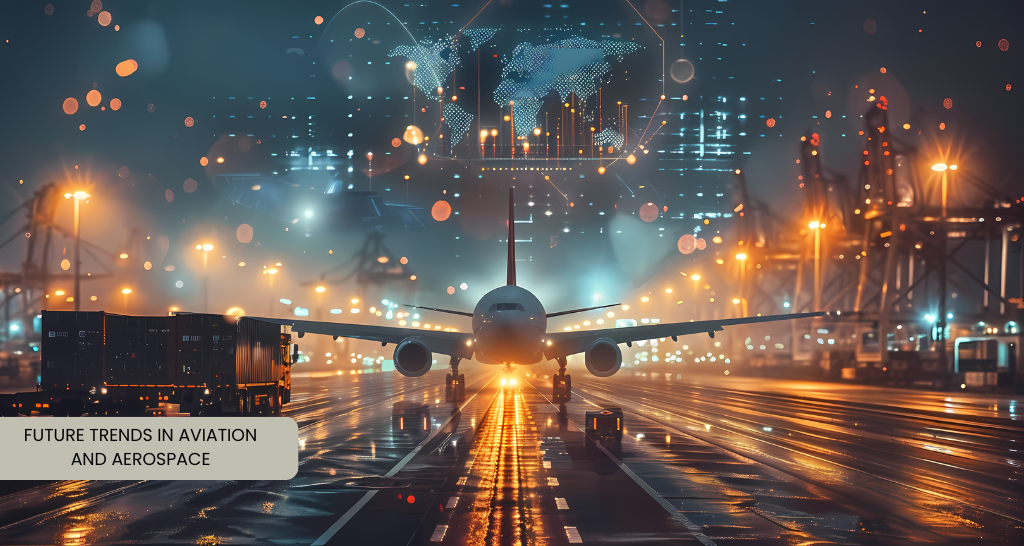
Introduction to the Aviation and Aerospace Industry
The aviation and aerospace industry plays a critical role in the global economy, impacting various sectors, from tourism and freight transportation to national defense and technological innovation. This multi-faceted industry encompasses the design, development, manufacturing, operation, and maintenance of aircraft, spacecraft, and related systems and equipment. The significant economic contributions of this sector demonstrate its importance, as it fosters job creation, drives technological advancements, and enhances connectivity across the world.
Over the years, the aviation and aerospace industry has experienced remarkable growth, with the International Air Transport Association (IATA) reporting that global air traffic levels have increased consistently. Passenger numbers, for instance, are projected to double over the next two decades, driven by expanding middle classes in emerging economies and an increasing desire for global travel. Moreover, emerging trends such as urban air mobility and electric vertical takeoff and landing (eVTOL) aircraft are set to revolutionize urban transportation, offering new opportunities for industry expansion.
Technological advancements are at the forefront of shaping the future of aviation and aerospace. Innovations such as artificial intelligence, machine learning, and big data analytics are enhancing operational efficiency, safety, and customer experience. Additionally, sustainable aviation technologies, including developments in fuel efficiency and alternative propulsion systems, are gaining prominence as environmental concerns continue to grow globally. The integration of these technologies aims not just at increasing economic output but also at ensuring the industry’s sustainability in the face of climate change.
As the aviation and aerospace industry evolves, it is evident that continuous innovation, regulatory adaptability, and strategic investments will be vital in navigating the complex landscape of future demands and challenges. Understanding these elements provides essential insights into the industry’s trajectory and the significant implications for global connectivity and economic development.
Sustainability Initiatives in Aviation
The aviation industry is undergoing a significant transformation, driven by the urgent need for sustainability and the reduction of environmental impact. With increasing global awareness of climate change and a growing demand for sustainable practices, airlines and manufacturers are actively seeking ways to mitigate their carbon footprints. This demand for sustainability has catalyzed numerous initiatives aimed at making aviation more environmentally friendly.
One of the prominent trends in the quest for sustainability in aviation is the exploration and adoption of alternative fuels. Biofuels, which are derived from organic materials, present a viable solution to reduce greenhouse gas emissions compared to traditional jet fuels. Airlines are investing in research partnerships and projects focused on the development of sustainable aviation fuels (SAFs). These fuels can potentially reduce carbon emissions by up to 80% over their lifecycle, representing a significant stride towards achieving more sustainable air travel.
In addition to biofuels, the aviation sector is also making strides in electric and hybrid-electric aircraft technology. Various organizations are working on designing planes that leverage battery-powered propulsion systems to eliminate or drastically lower emissions during flights. The success of these initiatives signifies a movement towards greener alternatives, alongside advancements in aerodynamics and lightweight materials that contribute to improved fuel efficiency.
Moreover, airlines are implementing operational strategies aimed at enhancing fuel efficiency. By optimizing flight paths, reducing weight, and employing more efficient engines, the industry can minimize fuel consumption. These operational initiatives are complemented by investments in ground infrastructure aimed at reducing turnaround times and enhancing the overall efficiency of air travel.
As sustainability initiatives continue to evolve within the aviation sector, it is evident that the commitment to reducing environmental impacts will play a central role in shaping the future of air travel. The integration of innovative technologies and strategic practices highlights a promising trajectory towards a more sustainable aviation industry.
Emergence of Urban Air Mobility (UAM)
Urban Air Mobility (UAM) is rapidly gaining traction as a cutting-edge transportation solution aimed at addressing the burgeoning need for efficient transit in increasingly congested urban environments. UAM refers to the use of small, electric, vertical takeoff and landing (eVTOL) aircraft to transport passengers and cargo within metropolitan areas. This industry stands poised to revolutionize urban transportation by providing an alternative to traditional ground-based vehicles, significantly reducing travel times and alleviating traffic congestion.
Numerous companies are leading the way in the development of air taxi services under the UAM umbrella. Companies such as Joby Aviation, Volocopter, and Archer are at the forefront, each working diligently to bring their respective eVTOL aircraft to market. These innovators are not only focused on the technical specifications of their aircraft but also on establishing the ecosystem necessary for UAM to thrive. This includes infrastructure for takeoff and landing, as well as integrating air traffic management systems that can handle urban airspace.
Despite the exciting prospects of UAM, various regulatory challenges must be navigated before these airborne vehicles can operate widely. Governmental aviation authorities, such as the Federal Aviation Administration (FAA) in the United States, are tasked with ensuring the safety and efficiency of UAM operations. These regulations will address aspects such as pilot training, maintenance standards, and airspace utilization to mitigate potential risks associated with flying in densely populated areas. The establishment of a robust regulatory framework is essential to foster public trust and encourage investment in UAM.
As cities continue to expand and traffic congestion worsens, the emergence of Urban Air Mobility offers a glimpse into a future where urban transportation may become more efficient and accessible.
The Role of AI and Automation
Artificial intelligence (AI) and automation are rapidly transforming the aviation and aerospace sectors, significantly impacting aircraft design, manufacturing processes, and airline operations. These technologies enhance efficiency, reduce costs, and improve safety, thereby shaping the future of air travel.
In aircraft design, AI algorithms can analyze vast datasets to optimize aerodynamics and structural integrity. This data-driven approach not only accelerates the design process but also allows for more innovative solutions that traditional methods may overlook. The integration of AI in computational fluid dynamics, for example, enables engineers to simulate airflow over complex shapes with remarkable accuracy, leading to the development of more efficient aircraft.
The manufacturing processes in aviation are also experiencing a revolution through automation and robotics. Automated systems can perform repetitive tasks, such as riveting and painting, with precision that minimizes human error. Additionally, the use of AI-driven predictive maintenance systems in manufacturing allows for real-time monitoring of equipment health, thus lowering downtime and maintenance costs. This results in a more streamlined production line that can quickly adapt to market demands.
Airline operations benefit from AI and automation in several ways, including enhanced scheduling, fuel management, and customer service. AI algorithms can analyze historical data to optimize flight paths, significantly reducing fuel consumption and operational costs. In customer service, chatbots powered by AI provide passengers with instant support, improving the overall travel experience while reducing the workload on human staff.
Despite these advantages, the adoption of AI and automation in aviation presents challenges, including regulatory hurdles and the potential displacement of jobs. As these technologies develop, the industry must carefully navigate these issues to ensure sustainable growth and continued innovation.
Advancements in Aircraft Design and Technology
The aviation industry is experiencing a remarkable transformation driven by advancements in aircraft design and technology. These developments encompass a wide range of innovations, including supersonic jets and hypersonic travel, alongside the use of advanced materials and systems aimed at enhancing performance and safety. Supersonic jets, which have recently returned to the forefront of aviation discussions, promise to significantly reduce travel times, enabling passengers to fly from New York to London in just a few hours. Companies like Boom Supersonic are pioneering designs that blend speed with efficiency, focusing on noise reduction strategies to comply with environmental standards.
Moreover, hypersonic travel, defined as speeds exceeding five times the speed of sound, represents the next frontier in aviation. This technology, currently in experimental stages, has the potential to revolutionize long-distance travel, shrinking global connectivity timeframes exponentially. Several aerospace organizations are actively researching hypersonic vehicles, exploring the complexities of thermal protection and aerodynamics that adhere to such extreme speed capabilities, which will be vital for both commercial and military applications.
In addition to speed, innovations in materials play a critical role in modern aircraft design. Lightweight composites and advanced alloys are increasingly utilized to create structures that are not only stronger but also more fuel-efficient. This focus on materials, paired with cutting-edge systems, such as fly-by-wire technology and integrated modular avionics, facilitates improved vehicle performance while enhancing safety through advanced monitoring and control capabilities. Improvements in aerodynamics, such as innovative wing designs and adaptive control surfaces, further contribute to enhanced fuel efficiency and reduced environmental impact. As the industry moves forward, these advancements are set to pave the way for a new era of aviation that prioritizes speed, efficiency, and sustainability.
Space Exploration and Commercialization Trends
In recent years, the landscape of space exploration has undergone significant transformation, primarily driven by the rise of private companies. Historically dominated by government agencies, the aerospace sector is now witnessing a surge of interest and investment from private enterprises eager to explore new frontiers. This trend is redefining how we approach space initiatives, with a focus on commercialization and sustainability.
One of the most notable trends in this domain is the commercialization of space through satellite launching capabilities. Companies such as SpaceX, Blue Origin, and Rocket Lab have greatly decreased the costs associated with launching satellites into orbit. By providing reliable and efficient launch services, these companies enable a myriad of applications ranging from communications to earth observation. This accessibility not only enhances global connectivity but also encourages innovations in technology and service delivery.
Alongside satellite deployment, the concept of space tourism has gained momentum, spearheaded by firms like Virgin Galactic and Blue Origin. With successful test flights and the initiation of commercial spaceflights, these ventures are laying the groundwork for a new sector within the aviation and aerospace industries. Space tourism presents unique opportunities for both economy and technology development, expanding the public’s engagement with space travel and fostering a culture where outer space is no longer seen as an unreachable frontier.
Future missions to Mars and beyond are prominently in the conversation as well, signifying humanity’s ambitions to explore and possibly colonize other planets. Enterprises like SpaceX are not only working towards making Mars missions a reality but are also championing technologies that will facilitate long-term habitation on other celestial bodies. The collaboration between public and private sectors is vital to the success of these ambitious goals. As we look to the future, the space exploration and commercialization landscape will continue to evolve, potentially allowing for unprecedented human achievements in the cosmos.
Cybersecurity in Aviation and Aerospace
The aviation and aerospace industries are increasingly reliant on digital systems, making cybersecurity a paramount concern. As technology advances, the complexity of aircraft and airport operations grows, creating more opportunities for cyber threats. Cybersecurity in aviation is defined by the measures put in place to protect electronic systems, networks, and data from unauthorized access, theft, or damage. Ensuring the integrity and confidentiality of critical systems is not just beneficial; it is essential for maintaining safety and trust in air travel.
Risks associated with digital systems in aviation include potential attacks that could compromise flight navigation and control systems, ground handling, and passenger data management. Incidents such as data breaches and ransomware attacks have shown that adversaries are keen to exploit vulnerabilities in aviation systems. For example, recent cyberattacks have targeted airports, causing operational disruptions and raising significant concerns about public safety and national security.
To mitigate these threats, stakeholders in the aviation industry are adopting a multi-layered approach to cybersecurity. This includes implementing stringent security protocols, continuous monitoring of networks, and conducting regular security assessments to detect vulnerabilities. Moreover, fostering a culture of cybersecurity awareness among staff is critical, as human error often presents a significant risk. Innovative technologies like AI and machine learning also play a crucial role in identifying and responding to cyber threats in real-time.
The growing importance of cybersecurity in aviation cannot be overstated. As reliance on digital systems continues to rise, so do the skills and capacity relevant to securing these systems. Aviation stakeholders must prioritize and invest in cybersecurity measures to protect their operations, safeguard passenger trust, and ensure the future of air travel remains uninterrupted and secure.
Global Regulatory Changes and Their Impact
The aviation and aerospace sectors are witnessing transformative global regulatory changes that significantly affect air travel, safety standards, and environmental regulations. As the world becomes increasingly interconnected, international bodies such as the International Civil Aviation Organization (ICAO) and the Federal Aviation Administration (FAA) are evolving their regulatory frameworks to improve operational efficiency and ensure safety. Recent changes aim to address issues related to operational procedures, air traffic management, and pilot training, reflecting the need for a more integrated aviation operation across borders.
Future regulations are anticipated to focus more on stringent safety standards. For instance, compliance with new safety protocols designed to mitigate risks associated with technological advancements, such as the integration of drones and unmanned aerial vehicles (UAVs), will require stakeholders to adapt swiftly and effectively. This adaptability is essential to maintain the safety of air travel while harnessing the benefits of innovative technologies.
Furthermore, environmental regulations are becoming increasingly prominent. Governments worldwide are setting ambitious targets to reduce carbon emissions in the aviation industry, catalyzing the development of sustainable aviation fuels (SAFs) and more efficient aircraft designs. Such regulatory measures encourage investments in greener technologies, which can potentially reshape the market dynamics of the aviation sector. Stakeholders, including airlines, manufacturers, and service providers, must develop strategies to align with these environmental mandates to remain competitive in a tightening regulatory environment.
As these regulatory changes unfold, the implications for stakeholders vary widely, encompassing compliance costs, operational adjustments, and competitive advantages for those who proactively embrace the evolving landscape. The successful navigation of these new regulations will ultimately hinge on the ability to innovate and collaborate across all levels of the aviation industry.
Future Outlook and Conclusion
The aviation and aerospace industry is at a pivotal juncture, with an increasingly complex landscape shaped by technological advancements, environmental concerns, and evolving consumer expectations. The future outlook for this sector is bright yet challenging, underscoring the need for sustained innovation and collaboration among stakeholders. As we have explored throughout this blog, the integration of electric propulsion systems and sustainable aviation fuels fundamentally alters the dynamics of air travel, offering a path towards a greener industry.
The rapid development of autonomous technologies also promises to transform air travel, enhancing safety and efficiency while making flying more accessible to the general public. The emergence of urban air mobility solutions presents additional opportunities, reshaping how we conceptualize transport within cities. These advancements signal a shift towards a more interconnected world, where time and distance are significantly reduced.
Moreover, the importance of international cooperation cannot be overstated as the aviation and aerospace industry navigates regulatory frameworks, safety standards, and environmental challenges that transcend national borders. Collaborative efforts among governments, private firms, and research institutions will be vital in accelerating the adoption of next-generation technologies and in developing robust infrastructure to support these innovations.
While the path forward may hold uncertainties, the continued emphasis on research and development, coupled with strategic partnerships, will play a crucial role in driving the industry towards a sustainable and efficient future. In conclusion, the aviation and aerospace sectors stand on the brink of a new era, characterized by resilience and adaptability in the face of ever-evolving challenges and opportunities. As stakeholders unite in their efforts to promote innovation and sustainability, the rewards are bound to be significant, paving the way for a more efficient global transportation network.